What is food distribution software?+
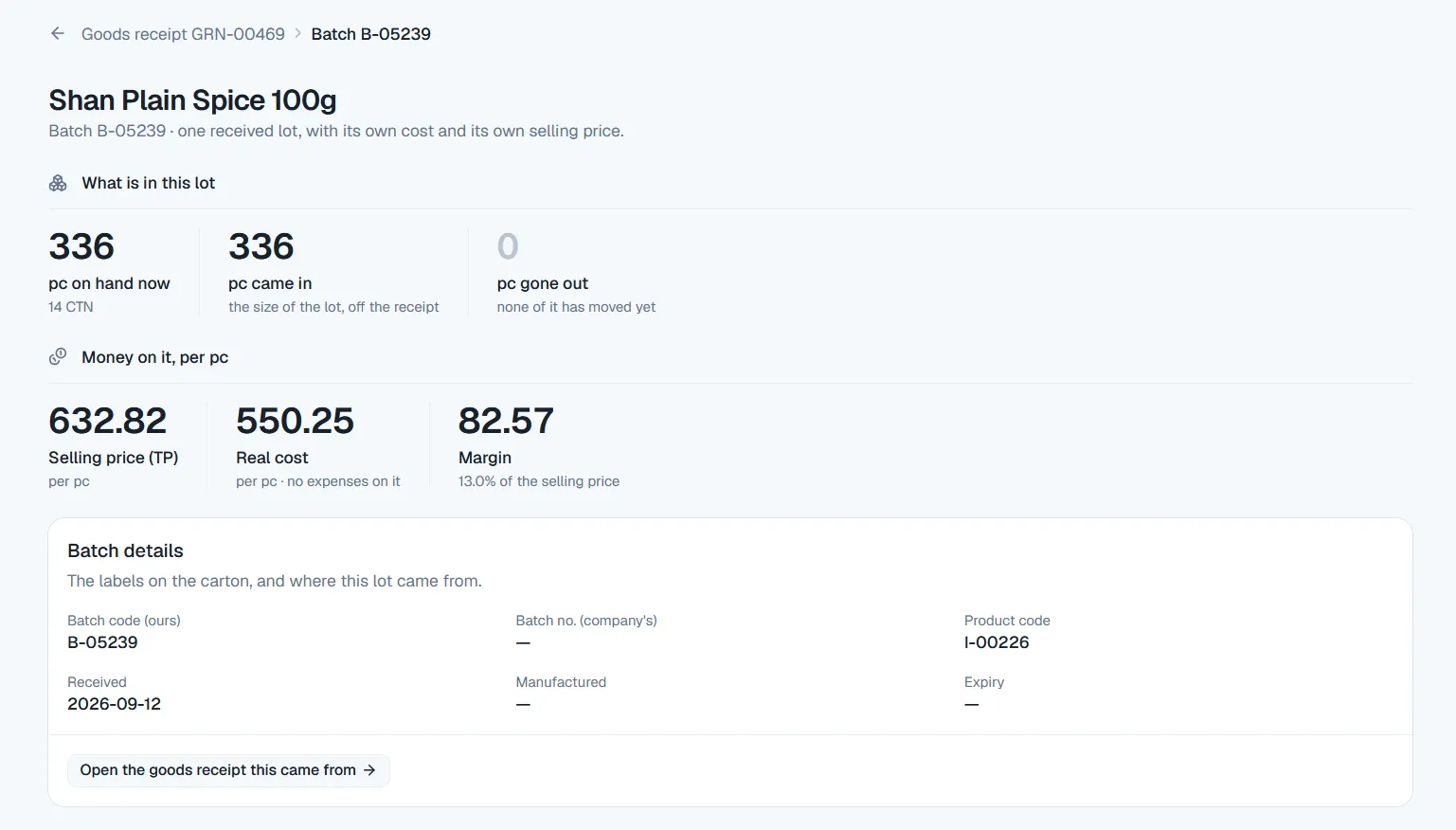
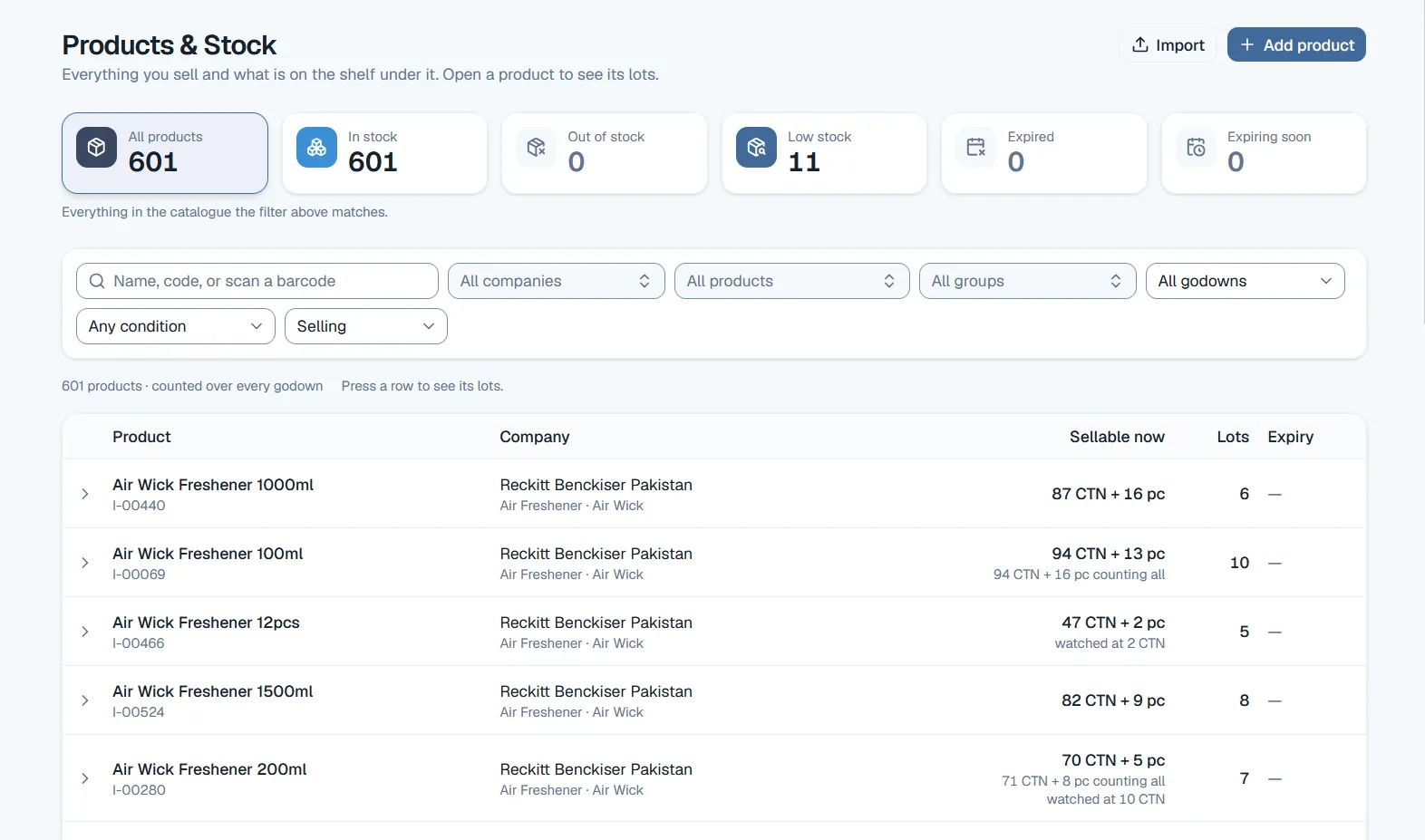
Food distribution software is the system a food, grocery or beverage distributor uses to run his whole business: what is in the godown, what each consignment cost, when each consignment expires, what every shop owes, and what the month actually made. It differs from ordinary stock software in two ways. It keeps an expiry date on every consignment rather than one date per product, and it keeps the cost of each consignment separate instead of averaging them, because the cost of a food line changes with almost every load. Netolyst DMS is a distributor management system of this kind, built for distribution houses in Pakistan.
Does it stop expired stock from being sold?+
Yes. Once a lot is past its expiry date it cannot go on a bill at all. It is still counted and still visible, so it has not disappeared from your stock, but the selling side will not take it. That is a rule inside the product, not a warning message somebody can click past.
Can I be warned ninety days early on one line and seven days early on another?+
Yes. The warning window is set per product, and any product that does not set one uses the house default. This exists precisely because one number for the whole catalogue is useless. A sack of rice and a carton of yoghurt drink do not need the same notice.
My cost changes every consignment. Does the software average them?+
No, and that is deliberate. Each consignment is its own lot with its own cost and its own selling rate, and two lots of the same product are never blended into one cost. Freight, bilty and unloading go into the cost of the carton at the goods receipt, so the figure your profit page reads is the real landed cost.
Does it record temperature or manage a cold chain?+
No. There is no temperature recording, no temperature alert, no cold-room monitoring and no connection to any sensor or logger. If your business depends on proving that a temperature was held, this software has nothing to offer on that part of it, and a demonstration will not change that.
Does it pick the nearest-expiry lot first?+
No. It picks the lot that arrived first, which is normal Pakistani trade practice. Expiry is still fully tracked and expired stock cannot be sold at all. In most food lines the oldest lot is also the lot closest to its date. Where the two are not the same, the near-expiry report tells you, and a person decides which lot to send.
What happens to goods a shop hands back?+
They come back against the bill they went out on, at the exact lots they left on, and land in whichever godown and condition you say — usually the damage room. The shop’s khata is credited for the returned value. Nothing goes back onto the saleable shelf unless you put it there. If those cartons had earned free goods under a company scheme, the return takes the free goods back with them.
Can I keep damaged and returned food separate from what I sell?+
Yes. Stock is held by lot, by godown and by condition — saleable, damaged, expired or waiting on a bill — and only saleable stock can go on a bill. The damage room is a real separate place in the software because it is a real separate room in your building. Goods move into it on a document with a reason, and move back out the same way if they are re-graded.
Can I sell by weight?+
Yes. Quantities carry three decimal places, so kilos and grams behave properly and 1.250 kg stays 1.250 kg. The weight is typed, though. There is no connection to a weighing scale.
How does my booker take orders where there is no signal?+
He carries an Android phone with his shops in walking order, what each one owes, what each one bought last time, and the catalogue. It works with no signal at all. Orders wait on the phone until he taps Send, nothing is lost if the app is killed or the phone restarts, and nothing arrives twice if the network drops part-way through sending. Every figure on his screen shows how old it is.
Does it handle more than one company’s agency?+
Yes. The catalogue is split by company, the same product held under two companies is two separate items, and each company gets its own stock-and-sale statement and its own list of what is outstanding in the market. Stock can sit together in one godown physically while reporting separately.
Do I still need a separate accounting program?+
No. The khata is inside the product and the accounting writes itself as each document posts. Nobody types a voucher and nothing is exported to a second program. The profit page, the balance sheet and the cash flow all come out of the same transactions.
Is there a delivery or van-sales module?+
No. The bill is cut at your office. There is no van stock, no load sheet and no app for the supplyman at the door. A bill can record that it was paid in cash at the moment it is entered, but the delivery run itself is not managed here.
What does it cost?+
No price is published, because none is set. The shape is decided: one product with everything in it, priced in rupees for a term you choose, with no tiers. A 14-day free trial exists and you can start it yourself.